Being the 'Odogwu' in Your Family Isn't a Personality Trait

It's the third Friday of the month and your phone buzzes before you've even had your coffee. Not a text. An alert. Your account, doing what it does every payday since 2019: moving money to your mother's account, on autopilot, before you've even decided how you feel about it this month.
Back home there's a word for what you've become: Odogwu. It isn't handed out lightly. It's the title for the man who has arrived, whose success is loud enough that the whole family warms itself by it, the provider, the big man, the one who settles the bill before anyone finishes asking. It sounds like praise, and it is praise. It's also not a compliment anymore. It's a rota you never signed up for.
You didn't apply for this job. Nobody sat the family down and voted. But somewhere between your first international transfer, the one you did proudly, almost giddy, to fix the generator, and now, you became the Odogwu. The one whose name comes up first when NEPA takes light for a week, when a cousin needs school fees, when an uncle's blood pressure medication runs out and nobody has asked the pharmacy how much it costs because they already know who's asking.
Here's the thing nobody tells you when you leave: being the Odogwu isn't a trait. It's a role. And roles get assigned, not chosen. Which means they can be renegotiated. But first you have to stop telling yourself the story that you were simply born this way, the responsible one, the strong one, the one who "just has a heart for family." That story is comfortable because it makes the arrangement feel like character instead of what it actually is: a set of decisions made once, years ago, that nobody has revisited since.
How You Got Cast for the Role
Think about the actual sequence. You didn't sit everyone down and say, "I will now be responsible for this family's cash flow indefinitely." What happened is smaller and quieter than that. You sent money once, because there was an emergency and you had it. You sent it again, because the emergency didn't really end, it just became a different emergency wearing the same clothes. By the fourth or fifth time, your family didn't see a person making a generous choice anymore. They saw a channel. A working pipe. And nobody thanks a pipe for delivering water. They just get upset when it stops.
That's the trap. The more reliable you are, the less visible your reliability becomes. Your siblings who send nothing aren't villains, most of the time they're just people who were never asked, because you never stopped being asked. The role calcifies around whoever answers first, and you were the one who picked up the phone at 11pm Lagos time even though it was 4am where you were.
Your Identity Is Doing Your Boundary's Job
Somewhere along the line, "I am the Odogwu" started functioning as a boundary substitute. It's easier to say "that's just who I am" than to say "I need my brother to cover Mum's hospital bill this quarter because I covered the last three." The first sentence closes the conversation. The second one opens it. And opening it means someone might say no, might get defensive, might ask why you're suddenly "changing," as though showing up consistently for six years and wanting a break in year seven is a betrayal instead of a completely reasonable human limit.
You are allowed to be generous without being infinite. Those are not the same thing, and your family has, understandably, never had to learn the difference, because you never made them.
The Cost That Never Shows Up on a Bank Statement
There's a version of this where you keep sending and never say a word, and it costs you in ways that don't show up on a bank statement. It shows up in the tightness in your chest when your phone rings during work hours and it's a Nigerian number. It shows up in the resentment you swallow when someone back home posts a new phone on Instagram the same week you skipped your own rent to send fees. It shows up in the quiet arithmetic you do every single payday, weighing your landlord against your mother, your own future against everyone else's present. An arithmetic nobody else in your family is doing alongside you, because you never told them the numbers exist.
The people who love you are not villains for not knowing what they were never shown. You cannot resent someone for failing a test they didn't know they were taking.
Renegotiating the Role Without Becoming the Villain of the Story
This isn't about sending less love. It's about making the sending sustainable enough that it doesn't quietly curdle into something bitter. A few things that actually shift the dynamic:
Say the quiet part. Not as an accusation, as information. "I've been the one covering Mum's upkeep for a while now, and I need us to figure out a rotation" is a sentence your family cannot respond to if you never say it. Silence reads as capacity. Speak, and let them recalibrate.
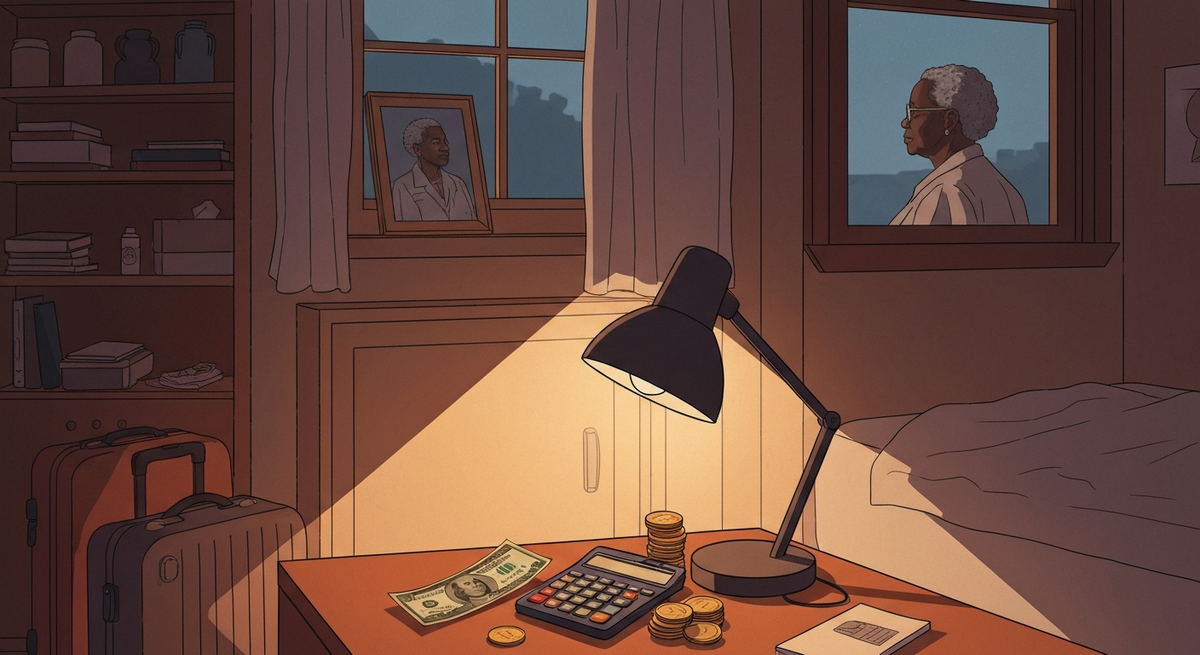
Separate the emergency from the pattern. An emergency deserves an Odogwu's instinct: show up, ask questions later. A recurring cost, school fees, monthly upkeep, rent, deserves a plan, not a reflex. If it happens every month, it isn't an emergency anymore. It's a budget line with your name permanently attached, and budget lines can be shared.
Let someone else be asked. Literally, put your sibling's name forward the next time an aunty calls asking who's handling something. Not because you're offloading care, but because you're the only reason the question has only ever had one answer.
Notice the difference between duty and identity. You can still be the one who shows up. You can still be, by nature, generous. But "I show up for my family" and "I am the only structural support this family has" are different claims, and only one of them is sustainable for the next twenty years.
Read the Job Description Before You Renew It
Nobody warns you that leaving home doesn't just relocate you. It reassigns you. You didn't leave to become a monthly line item in someone else's budget. You left to build something, and you can build it and still love your family fiercely, still send when it matters, still be the person people call first in a real crisis.
But the role you're playing right now was cast by circumstance, not chosen by you. And anything that was cast can be recast. You get to decide what you carry and what you set down. That's not selfish. That's just finally reading the job description before you sign another year of the contract.